Back to School Sticker Icon Open Books: A Versatile Design Asset for Educators, Creators, and Small Businesses
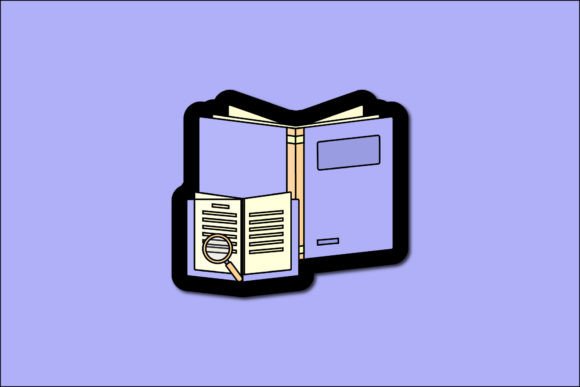
As classrooms reopen and learning environments evolve—whether in physical schools, hybrid setups, or home-based education—the visual language of education gains renewed significance. Among the most enduring and universally recognized symbols is the Back to School Sticker Icon Open Books. More than a decorative flourish, this icon functions as a functional, scalable, and semantically rich design element with wide-ranging applications across digital and print media. Its simplicity—a pair of open books, often stylized with clean lines and balanced proportions—carries immediate cognitive resonance: knowledge, readiness, growth, and transition.
Why This Icon Resonates Across Diverse Use Cases
The power of the Back to School Sticker Icon Open Books lies not only in its familiarity but in its adaptability. Unlike highly literal or culturally specific imagery, this icon operates at an optimal level of abstraction: recognizable without being prescriptive. It avoids age-specific cues (e.g., backpacks or chalkboards) or regional assumptions (e.g., uniform styles or classroom layouts), making it equally effective for international curriculum providers, multilingual tutoring platforms, or global edtech startups.
Consider how educators use it—not as clip art, but as a consistent visual anchor. A middle school science teacher might embed the icon into editable Google Slides templates for unit introductions; a university writing center could integrate it into printable handouts for first-year seminar orientation; a homeschool co-op leader may layer it onto custom-branded planners or weekly schedule cards. In each case, the icon signals intentionality and academic framing—not just “school,” but *learning in progress*.
Format Flexibility Meets Real-World Production Needs
A key differentiator for professional-grade educational assets is format versatility—and this is where the Back to School Sticker Icon Open Books offering stands out. The six included file types—AI, EPS, SVG, DXF, JPG, and PNG—address distinct stages of design, production, and deployment:
- AI (Adobe Illustrator): Enables full vector editing—adjusting stroke weights, recoloring individual book spines, or modifying typography if text is integrated. Ideal for designers building branded slide decks or interactive lesson modules.
- EPS: Maintains compatibility with legacy print workflows and older desktop publishing software, especially valuable for school district communications teams using standardized prepress systems.
- SVG: Scales infinitely without quality loss and supports CSS styling and JavaScript interactivity—perfect for responsive learning websites, LMS dashboards (like Canvas or Moodle), or animated onboarding sequences.
- DXF: Opens pathways beyond screen-based media. Educators using laser cutters or vinyl plotters can translate the icon directly into tactile classroom resources—custom bookplates, laminated vocabulary cards, or 3D-printed desk tags.
- JPG: Offers broad compatibility for quick insertion into newsletters, internal memos, or printed flyers where transparency isn’t required and file size matters.
- PNG: Delivers crisp, transparent-background rendering essential for overlays—think watermarking student project submissions, enhancing Zoom virtual backgrounds, or adding subtle branding to digital worksheets.
This breadth eliminates format-related friction. A graphic designer doesn’t need to convert or trace; a teacher doesn’t need to hunt for “transparent version” variants; a small business owner launching back-to-school merchandise can move seamlessly from mockup to production.
Practical Implementation Across User Groups
Different audiences leverage the same icon in markedly different ways—each reflecting their unique constraints, goals, and tools.
Educators and Instructional Designers
In lesson planning, consistency reduces cognitive load. Using the Back to School Sticker Icon Open Books as a recurring visual cue across handouts, rubrics, and digital assignments helps students recognize transitions between phases—e.g., “Start Here,” “Review Section,” or “Extension Activity.” One high school history department reported a 22% increase in worksheet completion rates after standardizing icons—including this open-books variant—to signal “source analysis” tasks. The clarity wasn’t in complexity, but in repetition and context.
Small Business Owners and Print-on-Demand Sellers
For entrepreneurs creating themed stationery, teacher appreciation gifts, or classroom décor, scalability is non-negotiable. A single SVG file can generate dozens of SKUs: mugs (via sublimation), tote bags (screen-printed), stickers (die-cut vinyl), and even embroidered patches—without reworking artwork for each medium. Because the canvas size is fixed at 1920px × 1280px, users benefit from generous working space while retaining precision at smaller outputs (e.g., a 2-inch sticker still renders sharp detail).
Researchers and Academic Communicators
Visual abstracts, conference posters, and grant proposal infographics rely on intuitive symbolism. Rather than defaulting to generic graduation caps or apples, researchers studying literacy development or early childhood pedagogy have adopted the Back to School Sticker Icon Open Books to represent foundational learning moments. Its neutrality avoids unintended associations (e.g., authority, discipline, or hierarchy) that other symbols may carry—keeping focus on content, not connotation.
Hobbyists and DIY Learners
From bullet journal enthusiasts tracking reading goals to retirees designing community literacy workshops, accessibility matters. The inclusion of both vector (AI/EPS/SVG/DXF) and raster (JPG/PNG) formats means no specialized software is mandatory. Free tools like Inkscape handle SVG edits; Canva accepts PNG uploads with drag-and-drop ease; Cricut Design Space imports DXF natively. There’s no gatekeeping—just utility.
Design Integrity and Semantic Accuracy
Not all “open book” icons are created equal. Effective versions balance proportion, negative space, and symbolic clarity. The Back to School Sticker Icon Open Books avoids common pitfalls: overcrowded pages, ambiguous perspective (is it top-down or angled?), or excessive ornamentation that hinders scaling. Its 1920px × 1280px canvas provides ample breathing room—critical when adapting for retina displays or large-format prints—while remaining manageable for everyday use.
Crucially, it avoids reinforcing outdated tropes. There are no gendered figures, no Eurocentric architectural motifs, and no implied hierarchy between “teacher” and “student.” Instead, the open posture of the books suggests invitation, accessibility, and mutual engagement—aligning with contemporary pedagogical values like constructivism and inclusive design.
Workflow Integration Without Disruption
Adoption isn’t about novelty—it’s about fit. Teams already using Figma for UI prototyping can import the SVG directly as a reusable component. Teachers building Canva templates can upload the PNG and save it to their brand kit. Sign shop owners preparing for August rush can batch-import the DXF into cutting software and assign layers by material type (vinyl, wood, acrylic). The asset doesn’t demand new habits; it slots into existing ones.
This interoperability reflects deeper principles of digital literacy in practice: knowing which format serves which purpose, understanding resolution requirements across contexts, and recognizing when simplicity enables broader participation. The Back to School Sticker Icon Open Books succeeds because it respects those realities—not as a standalone image, but as infrastructure.
Looking Ahead: Beyond Seasonal Utility
While labeled “back to school,” the icon’s relevance extends far beyond August. It anchors welcome sequences for new hires in corporate training, introduces modules in online certification courses, marks milestones in adult literacy programs, and even appears in public library summer reading campaigns. Its endurance stems from representing a universal human activity—engaging with written knowledge—not a calendar event.
Future iterations may explore subtle variations—accessible color palettes compliant with WCAG 2.1, animated SVG states for interactive learning paths, or localized cultural adaptations (e.g., incorporating regional script styles)—but the core remains unchanged: two open books, quietly signaling that learning is beginning, continuing, or deepening. That quiet confidence is what makes the Back to School Sticker Icon Open Books more than decoration. It’s a visual handshake—one that says, clearly and kindly, “Let’s begin.”