Back to School Banner Design with Bell: A Timeless Symbol Meets Modern Classroom Needs
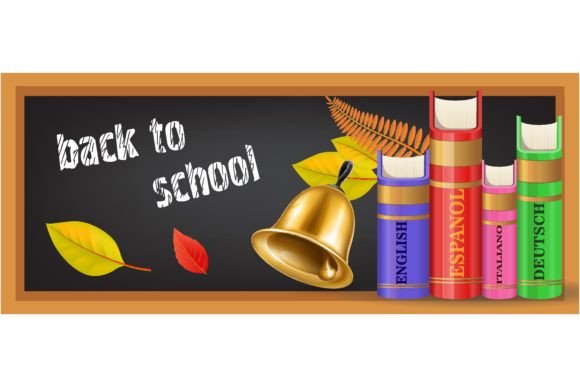
When it comes to welcoming students, families, and staff back after summer break, few visual tools pack as much instant recognition and emotional resonance as a well-crafted Back to School Banner Design with Bell. That familiar school bell—whether rendered in crisp vector lines or softened with vintage texture—immediately signals transition, routine, and fresh beginnings. But today’s educators and marketers aren’t settling for nostalgia alone. They’re pairing that iconic symbol with thoughtful design choices that reflect real classroom life: textbooks stacked neatly, autumn leaves drifting across the frame, and the warm, slightly imperfect grain of a chalkboard background. This isn’t just decoration—it’s strategic communication.
Why the Bell Still Rings True in 2024
The bell remains one of the most universally understood symbols in education. It doesn’t require translation. It doesn’t rely on age, language, or tech literacy. In a world saturated with digital alerts and app notifications, the bell offers something grounding—a tactile, auditory memory made visual. When incorporated into a Back to School Banner Design with Bell, it anchors the message in tradition while leaving room for contemporary expression.
Think about where these banners appear: hanging over main entrances, pinned to bulletin boards, shared digitally in parent newsletters, or printed as large-format posters for open house events. In each case, the bell acts as a visual shorthand—telling viewers, “This is where learning begins again.” It’s especially effective for younger grades, where symbolic clarity trumps abstract design.
Layering Meaning: Textbooks, Autumn Leaves, and Chalkboard Texture
A great Back to School Banner Design with Bell doesn’t stop at the bell. The supporting elements tell a richer story—one grounded in authenticity and seasonal relevance.
- Textbooks: Not just generic book silhouettes—but spines with visible titles, subtle wear along edges, or even a slight tilt suggesting recent use. These signal academic readiness, curriculum continuity, and the tangible work ahead. They reassure parents that structure and content are prioritized—not just celebration.
- Autumn leaves: Maple, oak, or ginkgo shapes in warm ambers, burnt oranges, and deep reds add organic rhythm and seasonal context. Unlike generic “fall” motifs, thoughtfully placed leaves suggest transition—not decay. They soften the formality of the chalkboard and echo the natural pacing of the school year.
- Chalkboard background: More than a trendy aesthetic, this surface evokes immediacy and possibility. Its subtle texture invites the eye to linger; its muted green or black base provides contrast without competing. Crucially, it allows text to pop—whether hand-lettered phrases like “Welcome Back!” or bold, clean sans-serif headlines for readability at a distance.
Together, these layers create visual harmony—not clutter. The bell draws attention first, textbooks ground the purpose, leaves add warmth and timing, and the chalkboard unifies it all with quiet authority.
Practical Applications Across Real-World Settings
This isn’t just about aesthetics—it’s about function. A Back to School Banner Design with Bell serves multiple roles depending on context:
- School entrance signage: Large vinyl banners (36" x 72") benefit from high-contrast chalkboard backgrounds and bold, legible fonts. The bell icon should be scalable—clear even when viewed from across a parking lot.
- Classroom door displays: Smaller 18" x 24" versions let teachers personalize welcome messages. Here, subtle chalkboard texture pairs beautifully with handwritten-style fonts—and a small bell icon in the corner adds cohesion without overwhelming.
- Digital communications: Email headers, social media graphics, and virtual open house slides all adapt well from this design system. Reduce leaf density for screen clarity; keep the bell prominent and the chalkboard tone consistent across platforms.
- Brochures and handouts: When scaled down, simplify textures—use flat chalkboard color blocks instead of grainy overlays. Place the bell near key information (e.g., first-day schedule) to guide the reader’s eye naturally.
Each application asks something different of the design—but the core identity stays intact. That consistency builds trust. Parents recognize your school’s visual voice across touchpoints. Students feel the same energy whether walking through the front doors or opening a digital newsletter.
What Educators and Designers Actually Prioritize
Before choosing or customizing a Back to School Banner Design with Bell, decision-makers weigh several practical factors:
- Readability at distance: Is the headline large enough? Does the chalkboard background support, rather than obscure, text? Test printouts at 25% scale—if you can’t read the date or grade level, it needs adjustment.
- Inclusivity in imagery: Avoid stereotyped representations. Opt for diverse student silhouettes (if included), neutral skin-tone icons, or focus on objects—like textbooks and leaves—that carry no cultural assumptions.
- Print vs. digital flexibility: CMYK color profiles matter for vinyl banners; RGB works best for screens. A well-built design file includes both versions—and clear font licensing notes if using custom typefaces.
- Reusability: Can the banner be updated year after year? Design with editable text fields and modular elements—swap out “2024–2025” or “Grade 3” without redesigning the whole layout.
Teachers often choose designs they can adapt themselves—using Canva or Google Slides templates that preserve the bell + chalkboard + leaves framework but allow quick text changes. That empowerment matters. It turns a static banner into a living part of the classroom culture.
Small Tweaks, Big Impact
You don’t need a full redesign to elevate your current materials. Try these actionable adjustments:
- Replace flat gray backgrounds with a soft chalkboard texture—even at 10% opacity, it adds depth and warmth.
- Add a single fallen leaf near the bottom corner of a brochure cover. It’s subtle, seasonal, and guides the eye upward toward the headline.
- Use the bell not just as an icon—but as a framing device. Place your main headline inside a circular bell outline, or let the clapper double as an underline beneath key text.
- Choose textbook illustrations with visible spines labeled “Science,” “Math,” or “Literature”—not just generic rectangles. It signals intentionality.
These aren’t decorative flourishes. They’re cues that tell your community: We see you. We know what this season means. And we’ve put care into every detail.
Designing with Purpose, Not Just Pattern
A Back to School Banner Design with Bell succeeds when it balances symbolism with substance. It honors tradition without leaning on cliché. It embraces autumn’s energy without reducing it to pumpkin spice. And it treats the chalkboard not as retro kitsch—but as a quiet nod to the daily, human act of teaching and learning.
Whether you're a PTA volunteer ordering 20 banners for hallway display, a district communications team updating annual templates, or a small tutoring studio launching its first branded materials—start with clarity of purpose. Ask: What feeling do we want families to have when they see this? What information must be instantly clear? What details will make teachers pause and say, “Yes—that’s us”?
Answer those questions, then let the bell ring—not as noise, but as invitation.