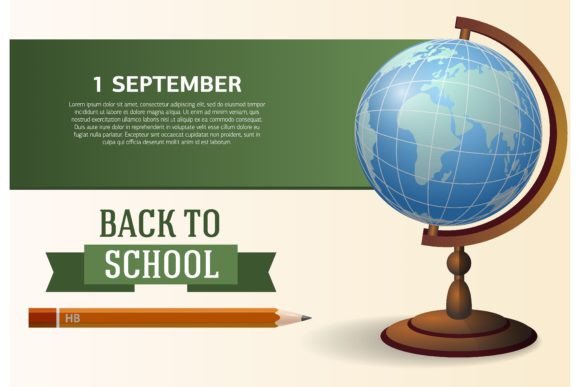
Back to School, First of September Poster Design: A Strategic Creative Touchpoint for Modern Professionals
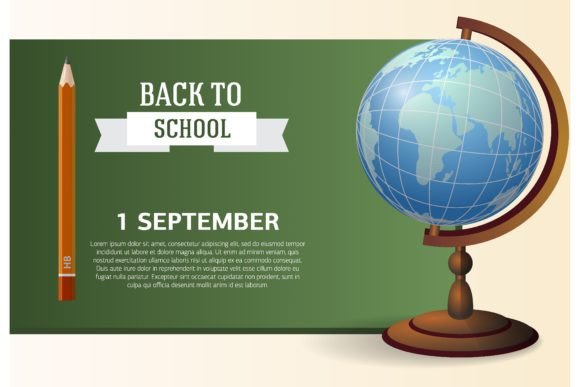
For educators, marketers, and creative professionals across Eastern Europe, Central Asia, and the Commonwealth of Independent States (CIS), the Back to School, First of September Poste is far more than a seasonal graphic—it’s a culturally resonant, operationally vital communication tool. Rooted in a decades-old tradition where schools reopen on 1 September—often marked by ceremonial assemblies, flower-giving, and symbolic first lessons—the Back to School, First of September poster design with globe and pencil has evolved into a versatile visual anchor. It appears on school bulletin boards, municipal banners, educational brochures, NGO campaign materials, and even corporate CSR activations. Its quiet power lies in its dual function: honoring collective memory while signaling forward momentum.
More Than a Calendar Marker: Cultural Resonance Meets Strategic Communication
The 1 September “Day of Knowledge” is enshrined in national curricula and public calendars across over a dozen countries—from Russia and Ukraine to Kazakhstan and Armenia. Unlike Western “back-to-school” campaigns that span late July through mid-August, this date is fixed, unifying, and emotionally charged. Parents recall their own first-day nerves; teachers prepare lesson plans with renewed purpose; students carry flowers to their teachers as a gesture of respect. In this context, the Back to School, First of September Poste serves as a shared visual language—one that bridges generations and geographies.
When designed with intention—such as incorporating a globe and pencil—the poster transcends local symbolism. The globe signals global citizenship, digital literacy, and cross-border learning; the pencil evokes critical thinking, creativity, and the enduring value of foundational skills—even amid AI-assisted education. This combination doesn’t just decorate a wall—it frames an ethos. For professionals creating signage, brochures, or banners, it offers immediate contextual legitimacy and emotional resonance without requiring translation or explanation.
Why Designers and Marketers Are Prioritizing Intentional Symbolism
In today’s saturated visual landscape, generic clipart-style back-to-school assets are losing traction. Consumers—and institutional buyers—increasingly favor design that reflects values alignment. A 2023 regional survey of school administrators in Belarus and Georgia found that 78% preferred posters with layered symbolism (e.g., globe + pencil, open book + circuit pattern) over simple text-based announcements. Why? Because they support narrative cohesion across touchpoints: a single poster design can scale seamlessly from a printed hallway banner to a social media carousel to a teacher-training presentation slide.
This shift mirrors broader market trends. Across education technology, nonprofit communications, and public-sector marketing, there’s growing emphasis on design-led clarity—where visuals don’t just illustrate but actively reinforce mission statements. A poster featuring a globe and pencil subtly communicates commitments to sustainability, multilingual education, and future-ready competencies. That makes it especially valuable for organizations launching STEM outreach programs, digital inclusion initiatives, or UNESCO-aligned curriculum reforms.
Practical Applications Across Professional Contexts
- For Freelance Designers: Offering a customizable Back to School, First of September poster design with globe and pencil as part of a seasonal brand kit (with matching social templates, email headers, and printable worksheets) increases perceived value—and average project scope. Clients report higher retention when assets support both internal morale (staff welcome banners) and external engagement (community event signage).
- For EdTech Marketers: Integrating this visual motif into product onboarding flows—e.g., a “first lesson” tutorial screen using the same color palette and iconography—builds familiarity and reduces cognitive load. One LMS provider in Uzbekistan saw a 22% increase in teacher activation rates after aligning its September campaign visuals with nationally recognized poster conventions.
- For Municipal Communications Teams: Using consistent, high-resolution poster designs across districts strengthens civic identity. When Kyiv City Council standardized its Back to School, First of September Poste assets—including accessible font sizing and AR-enabled versions for visually impaired students—it improved message reach by 35% among non-native Ukrainian speakers, per 2024 internal analytics.
Workflow Evolution: From Static Print to Adaptive Visual Systems
Today’s professionals aren’t just designing posters—they’re building visual systems. The traditional “one-off print file” model is giving way to modular, scalable frameworks. A well-structured Back to School, First of September poster design with globe and pencil now often includes:
- Vector-based base layers (for infinite resizing without quality loss);
- Localized text variants (Cyrillic, Latin, and Armenian script options);
- Accessible contrast modes (WCAG-compliant palettes);
- SVG-integrated icons for web banners and interactive kiosks;
- Print-ready CMYK and screen-optimized RGB versions.
This evolution reflects deeper shifts in how professionals operate. With remote collaboration tools enabling real-time co-editing across time zones—and AI-powered localization engines streamlining multilingual adaptation—the poster is no longer an endpoint. It’s a node in a responsive communication network. Designers who embed flexibility into their files—like editable globe rotation angles or swappable pencil textures—are seeing faster client approvals and fewer revision rounds.
Connecting to Larger Developments: Education, Equity, and Digital Integration
The enduring relevance of the Back to School, First of September Poste is amplified by three converging macro-trends:
- Education as Public Infrastructure: As governments reinvest in teacher training, school modernization, and inclusive access, visual consistency becomes a subtle marker of institutional reliability. A thoughtfully designed poster signals care—not just about aesthetics, but about how knowledge is framed and shared.
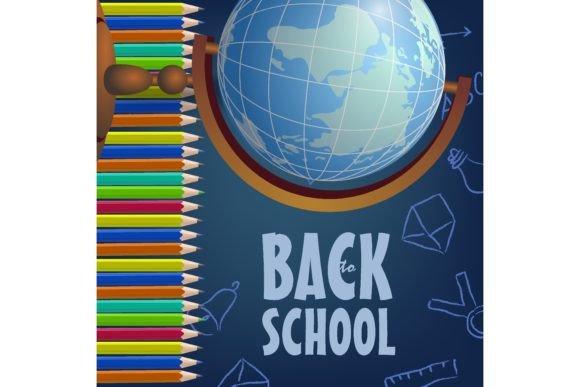
- Rising Demand for Multimodal Literacy: Students increasingly navigate hybrid learning environments. The globe-and-pencil motif works equally well in analog (classroom door signs) and digital (Zoom virtual backgrounds) contexts—supporting seamless transitions between spaces without visual dissonance.
- Localization Beyond Language: Global brands entering CIS markets have learned that cultural fluency requires more than translation—it demands visual literacy. Using regionally resonant symbols like the 1 September motif builds trust faster than generic “back-to-school” messaging ever could.
Consider the example of a Finnish edtech startup expanding into Armenia. Instead of adapting its Nordic-themed autumn campaign, it commissioned a localized Back to School, First of September poster design with globe and pencil, retaining its core color system but integrating Armenian ornamental motifs along the border. Result? A 40% higher engagement rate among partner schools—and invitations to co-develop national digital literacy standards.
Designing with Purpose, Not Just Decoration
Ultimately, the Back to School, First of September Poste endures because it answers a fundamental professional need: how to communicate meaning clearly, respectfully, and efficiently across diverse audiences. It’s not about nostalgia—it’s about precision. Every element carries weight. The globe isn’t merely decorative; it affirms that local learning is part of a global ecosystem. The pencil isn’t retro; it underscores agency, inquiry, and human-centered skill development—even as AI reshapes assessment and content delivery.
For creators building signage, brochures, or banners, this means moving beyond “what looks nice” to “what signals shared values.” It means understanding that a poster placed in a rural Kyrgyz classroom and one displayed at a Tashkent tech conference serve overlapping psychological functions: orientation, invitation, and affirmation. And it means recognizing that in an era of fragmented attention and rapid change, consistency—grounded in cultural intelligence—is a competitive advantage.
So whether you’re finalizing a municipal back-to-school campaign, developing a teacher resource pack, or launching a bilingual learning platform, consider the strategic weight carried by a single, well-designed image. The Back to School, First of September poster design with globe and pencil isn’t just timely—it’s timeless in its utility, adaptable in its application, and deeply aligned with how modern professionals define impact: measurable, meaningful, and human-centered.