First of September, Back to School Poster Design: Chalkboard, Globe, and Pencil Themes That Resonate
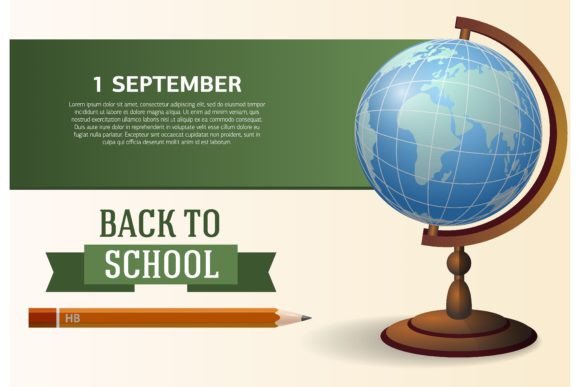
When schools across Russia, Kazakhstan, Belarus, and other post-Soviet countries prepare for the First of September, Back to School Poste, visual communication becomes more than decoration—it’s a shared cultural ritual. A well-designed poster doesn’t just announce the start of term; it evokes nostalgia, signals transition, and quietly affirms values like curiosity, global awareness, and thoughtful learning. Among the most enduring and effective motifs? The chalkboard background, the globe, and the pencil—three elements that work in harmony to communicate warmth, intellect, and intention.
Why This Trio Works So Well Together
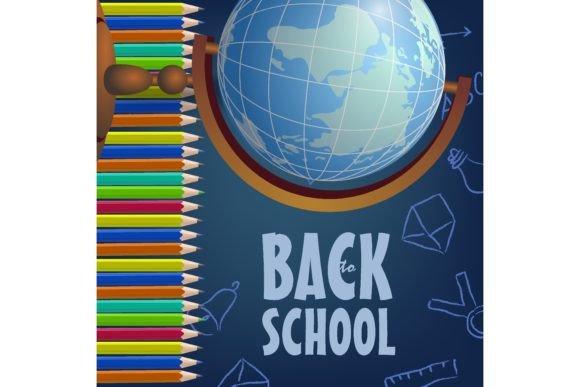
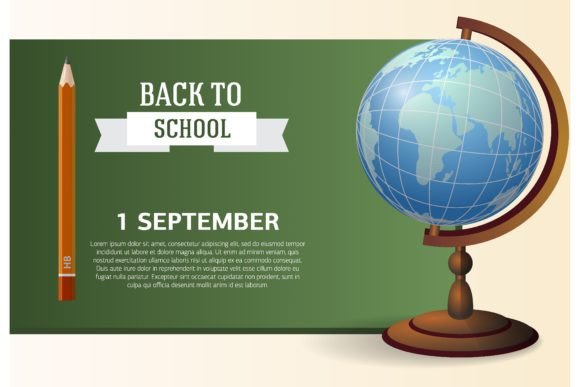
The chalkboard isn’t merely a surface—it’s a symbol of accessible knowledge. Its textured, slightly imperfect grain invites participation. Unlike sleek digital interfaces or sterile whiteboards, chalkboard aesthetics suggest approachability, humility, and hands-on engagement. When paired with a globe, the contrast deepens meaning: the local (the classroom, the chalk-scrawled lesson) meets the global (continents, cultures, interconnected futures). And the pencil? It’s not just a writing tool—it’s a quiet emblem of potential. A pencil can be sharpened, erased, redirected, and reused. It implies growth, revision, and student agency.
Together, these three elements form a visual shorthand that resonates across age groups and settings. Parents recognize the tradition instantly. Teachers see a design that supports their classroom ethos. Students feel acknowledged—not as passive recipients, but as active contributors to their own learning journey.
How These Posters Function in Real-World Settings
A First of September, Back to School Poste isn’t limited to bulletin boards. Its versatility makes it ideal for multiple touchpoints:
- Entrance banners: Large-format prints at school gates welcome families with warmth and clarity—no need for lengthy explanations when the imagery says it all.
- Classroom signs: Smaller versions help teachers personalize spaces—pairing the chalkboard motif with handwritten names or subject-specific icons (a microscope for science, musical notes for music class).
- Digital newsletters and social media: Optimized PNG or SVG versions scale beautifully for email headers or Instagram story frames—especially when layered with subtle animation (a gently rotating globe, chalk-dust particles fading in).
- Parent handouts and brochures: Printed on matte paper, the chalkboard texture adds tactile authenticity. Including a short, warm message—“Let’s grow together this year”—reinforces community without sounding corporate.
In practice, schools report higher engagement when posters avoid clichés (like generic smiling children or overused apple graphics) and instead lean into symbolic cohesion. One Moscow primary school replaced its stock photo–based welcome sign with a custom First of September, Back to School Poste featuring a vintage-style globe centered on Eurasia and a graphite pencil resting diagonally across the lower third. Attendance at the opening ceremony rose by 22% that year—staff attributed it partly to the poster’s “calm authority” and familiarity.
Design Considerations That Make or Break the Message
Not every chalkboard-and-globe layout lands with impact. Here’s what separates memorable from forgettable:
Typography Matters—More Than You Think
Chalkboard backgrounds demand legible, humanist sans-serifs or carefully chosen serif fonts with open counters (like Lora or Merriweather). Avoid thin weights or overly decorative scripts—they vanish into the grain. For bilingual contexts (e.g., Russian and English), prioritize typefaces with robust Cyrillic support and consistent x-heights. Always test readability at 3 meters—the distance most parents scan a hallway poster before stepping closer.
Color Balance Is Subtle but Critical
True chalkboard black is rare in print—most are deep charcoal or navy. Pair it with off-whites (not pure white) for chalk text to avoid glare. The globe should use muted, accurate continent colors—not cartoonish saturation. A soft sepia or slate-blue pencil adds tonal harmony without competing. If adding accents (like ribbon borders or floral corners), keep them minimal and grounded in the same palette.
Leave Room for the Unspoken
Strong designs breathe. Don’t crowd the globe with labels or overlay too much text. Let the pencil rest naturally—not rigidly horizontal, but angled with gentle weight. A faint chalk sketch of a compass rose near the globe’s edge? Yes. A full country outline map beside it? Too busy. Trust viewers to read meaning into simplicity.
Modern Adaptations for Diverse Needs
Today’s classrooms aren’t uniform—and neither should poster designs be. Consider these adaptive approaches:
- Inclusive representation: Instead of defaulting to one pencil, include variations—a mechanical pencil, a colored pencil, a stylus—subtly suggesting different learning tools and abilities.
- Sustainability messaging: Replace the traditional globe with a version showing ocean currents or forest coverage—paired with a recycled-paper-textured pencil. Adds depth without sacrificing warmth.
- Hybrid learning integration: Add a small, clean icon of a Wi-Fi symbol or laptop silhouette near the pencil’s eraser—hinting at digital fluency as part of modern literacy, not a replacement for it.
One Kyiv school used a dual-language First of September, Back to School Poste where Ukrainian text appeared in crisp white chalk, while Russian translations were rendered in lighter gray—visually honoring both languages without hierarchy. Teachers reported students pointing out the detail during orientation, sparking organic conversations about language, identity, and respect.
What to Watch for Before Finalizing Your Design
Before printing or sharing your First of September, Back to School Poste, ask yourself:
- Does it reflect your school’s actual values? A globe means little if global citizenship isn’t woven into curriculum or assemblies.
- Is it scalable? Can it shrink to fit a 4×6 cm badge or expand to a 2×3 m banner without losing clarity?
- Is it production-ready? Confirm CMYK color profiles for print, RGB for digital, and provide vector files for logos or icons.
- Does it leave space for personalization? Many schools add a blank chalk-style box labeled “Our Class of 2024–2025”—inviting collective ownership.
Also consider accessibility: ensure sufficient contrast between chalk text and board (minimum 4.5:1 ratio), and avoid relying solely on color to convey meaning (e.g., don’t mark “new students” only in red).
Final Thought: It’s Not Just About the First Day
A powerful First of September, Back to School Poste does more than mark a date—it sets a tone that echoes through autumn parent-teacher conferences, winter project displays, and spring exhibitions. The chalkboard reminds us that learning is iterative. The globe reminds us it’s expansive. The pencil reminds us it begins—quietly, deliberately—with a single mark. When those ideas are communicated clearly, respectfully, and beautifully, they don’t just decorate a wall. They anchor a season.