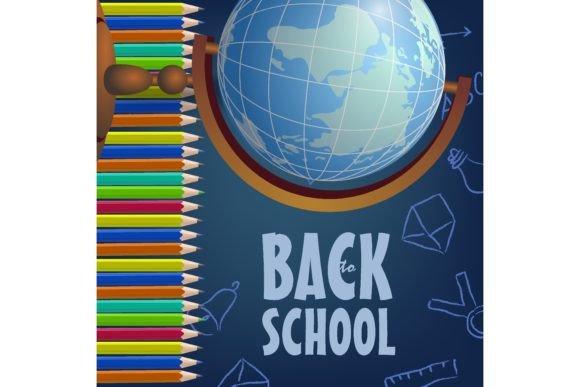
Back to School Poster Design with Colore: A Practical Guide for Educators and Designers
Back to School Poster Design with Colore refers to a distinct visual approach that emphasizes hand-drawn warmth, tactile texture, and intentional color layering—often achieved using colored pencils, layered over evocative backgrounds like a dark blue chalkboard or a softly rendered globe. Unlike digitally uniform templates or vector-heavy designs, this style prioritizes organic variation: subtle pencil grain, gentle color blending, and thoughtful compositional balance. It’s not just about aesthetics—it reflects a pedagogical tone: approachable, grounded, and human-centered.
What Sets Back to School Poster Design with Colore Apart
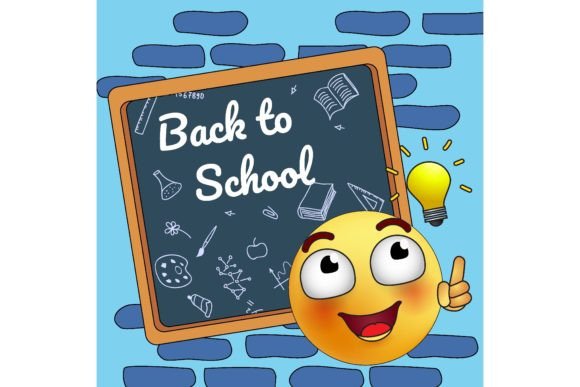
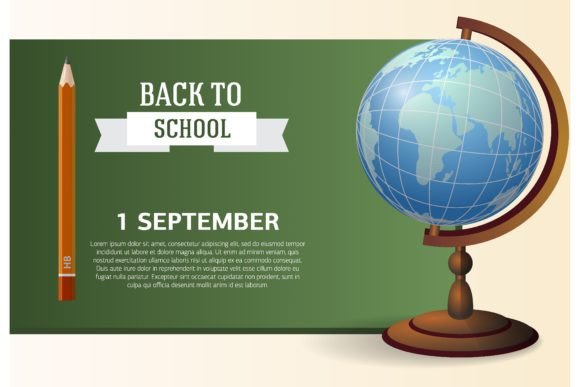
The defining trait of Back to School Poster Design with Colore is its material authenticity. When colored pencils are used deliberately—not as filler, but as expressive tools—they introduce nuance that flat digital fills can’t replicate. A light blue sky drawn with cross-hatched cerulean and cobalt creates depth; a globe sketched in earthy ochres and muted greens conveys global awareness without cliché; the dark blue chalkboard background isn’t just a backdrop—it’s a visual anchor that enhances legibility while reinforcing themes of learning and classroom tradition.
This approach differs meaningfully from other common poster strategies:
- Digital illustration posters often prioritize scalability and consistency but may lack warmth or individuality—especially when reused across multiple grade levels or schools.
- Photographic back-to-school posters offer realism but risk datedness (e.g., outdated uniforms or tech) and limit adaptability for diverse student populations.
- Minimalist typography posters emphasize clarity and modernity but sometimes sacrifice emotional resonance or age-appropriate charm for younger learners.
Back to School Poster Design with Colore occupies a middle ground: it’s structured enough for professional use in signs, brochures, and banners, yet flexible enough to feel personal and inclusive.
Fitness for Purpose: Where This Style Excels
Back to School Poster Design with Colore works especially well in contexts where tone matters as much as information. Consider these realistic applications:
- A school-wide welcome banner hung in the main hallway: the textured globe and soft pencil shading convey unity and curiosity without overwhelming students on their first day.
- A classroom door sign for a third-grade teacher: hand-lettered text in warm reds and yellows, paired with a small pencil-drawn apple and book, feels inviting rather than institutional.
- A parent orientation brochure cover: the dark blue chalkboard background grounds the layout, while colored-pencil icons (a backpack, calendar, smiling face) clarify content at a glance—no translation needed.
Its strength lies in readability at varied distances and sizes. Because colored pencils naturally create slight contrast gradients—even on matte paper—the design remains legible when printed large for banners or scaled down for handouts. The dark blue background also reduces glare under fluorescent lighting, a practical advantage in real school environments.
Tradeoffs and Limitations to Acknowledge
No approach fits every need—and Back to School Poster Design with Colore is no exception. Its handmade qualities come with constraints worth weighing:
First, reproducibility across formats requires careful preparation. While high-resolution scans work well for print, converting detailed pencil textures to web-friendly PNGs or SVGs can flatten subtlety unless optimized intentionally. Designers should plan for two versions: one with richer texture for print, another simplified for digital signage.
Second, accessibility considerations must be built in—not assumed. The dark blue chalkboard background, while evocative, needs sufficient contrast against text. Light-colored pencil lettering (e.g., pale yellow) may fail WCAG AA standards unless paired with a subtle drop shadow or outlined type. Always test contrast ratios before finalizing.
Third, adaptability for multilingual use depends on layout flexibility. Unlike rigid grid-based templates, hand-drawn compositions often rely on spatial relationships that shift with longer translations (e.g., Spanish or Arabic). Leave generous margins and avoid tight text wrapping around illustrated elements to accommodate language expansion.
When to Choose—And When to Look Elsewhere
Back to School Poster Design with Colore is most appropriate when your goal is to signal care, continuity, and community—not just announce dates or policies. It suits schools emphasizing social-emotional learning, project-based instruction, or culturally responsive practices. If your team includes art educators, parent volunteers with craft experience, or designers comfortable scanning and refining analog work, this approach becomes more feasible and cost-effective.
Conversely, consider alternatives if:
- You need rapid iteration across dozens of grade-level variations—digital templates allow faster swapping of names, dates, and photos.
- Your audience includes many families with low literacy or emerging English proficiency—icons-only or photo-based visuals may communicate more immediately than stylized illustrations.
- You’re producing materials for outdoor or high-traffic areas where durability and weather resistance matter more than texture—vinyl banners with bold vector graphics often outperform paper-based colored-pencil designs in those settings.
Also note: “Colore” here isn’t shorthand for generic color—it signals intentionality. It’s the difference between adding color for decoration versus using hue to guide attention (e.g., warm tones for action items like “Register Now,” cooler tones for supportive messages like “We’re Here to Help”).
Practical Integration Tips
If you decide Back to School Poster Design with Colore aligns with your goals, keep these implementation notes in mind:
- Start analog, refine digitally. Sketch core elements by hand—globe, chalkboard frame, key icons—then scan at 300+ DPI. Use layers in editing software to adjust contrast, isolate text areas, and ensure consistent sizing across formats.
- Build a reusable palette. Limit your colored-pencil set to 6–8 hues that harmonize on dark blue: burnt sienna, slate gray, olive green, cream, cadmium yellow, and deep teal work cohesively and translate well to both CMYK and RGB.
- Test legibility early. Print a thumbnail-sized version (2" x 3") and view it from 6 feet away. If text or icons blur or merge, simplify line weight or increase spacing before scaling up.
- Repurpose thoughtfully. A single poster composition can yield a matching banner (cropped and enlarged), a brochure cover (with added text blocks), and social media tiles (zoomed-in details like a pencil-drawn compass or open book).
Remember: the value of Back to School Poster Design with Colore isn’t in its novelty—it’s in how consistently it supports your message. When students see a globe drawn with visible pencil strokes—not a stock image—they subconsciously register effort, presence, and care. That impression lasts longer than any slogan.
Making Your Decision More Informed
Ultimately, choosing a poster design approach comes down to alignment—not just with your calendar or budget, but with your school’s voice and values. Back to School Poster Design with Colore offers a compelling option when authenticity, warmth, and visual cohesion matter. It doesn’t replace digital efficiency—but it does reintroduce humanity into communication that too often defaults to automation.
Before committing, ask: Does this reflect how our staff and students actually experience learning? Will it age gracefully over the semester—or feel instantly disposable? Can it grow with us, adapting to new themes (like sustainability or digital citizenship) without losing its core identity?
Those questions don’t have universal answers. But they’re the right ones to ask—whether you choose Back to School Poster Design with Colore or another path entirely.