Back to School SVG Design, 3rd Grade Vib
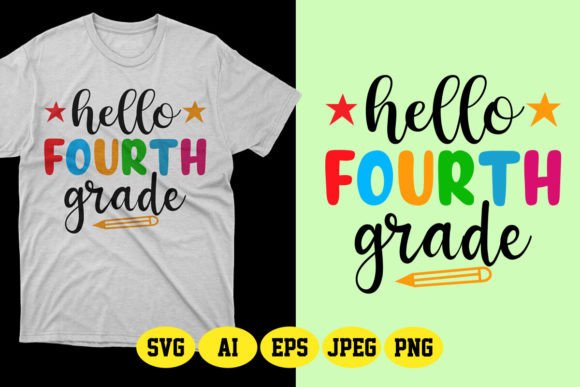
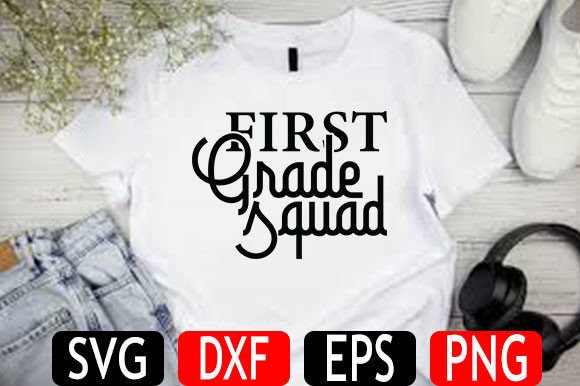
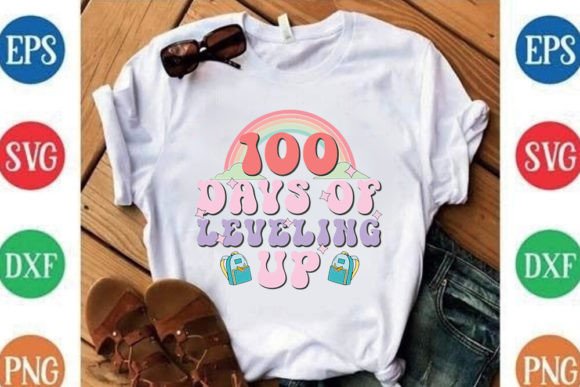
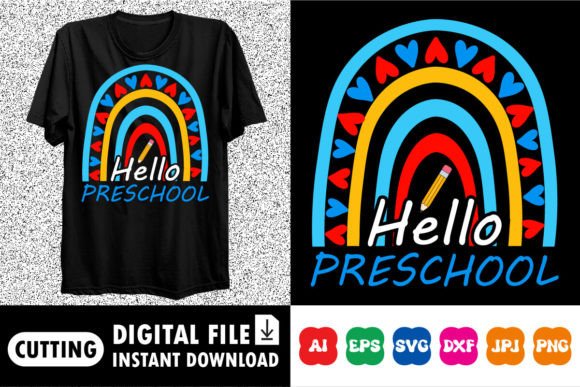
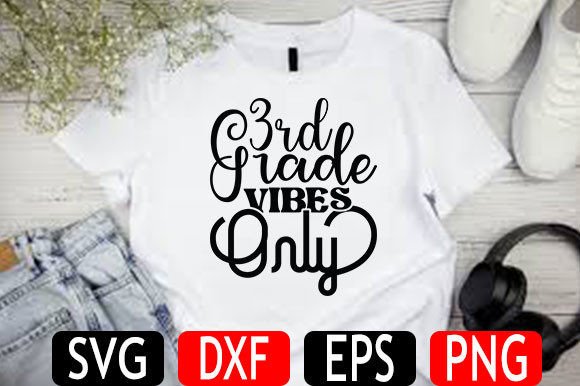
Back to School SVG Design, 3rd Grade Vib is a purpose-built digital asset pack tailored for creators who need age-appropriate, classroom-aligned visual elements—without sacrificing design integrity or production efficiency. It’s not a generic “school-themed” collection. Instead, it reflects the specific aesthetic, developmental tone, and expressive energy associated with third-grade learning environments: think collaborative projects, early independence, hands-on exploration, and joyful curiosity—not preschool simplicity nor middle-school abstraction. The ZIP file delivers four native formats—EPS, SVG, PNG, and DXF—making it compatible across cutting machines (Cricut, Silhouette), vector editors (Illustrator, Affinity Designer), raster workflows (Photoshop, Canva), and even basic web use.
What Makes This Pack Distinct from Broader “Back to School” Collections
Many back-to-school SVG bundles lean heavily into broad motifs: apples, chalkboards, pencils, or generic “A+” badges. Back to School SVG Design, 3rd Grade Vib takes a more intentional approach. Its iconography includes subtle but meaningful cues—like illustrated multiplication arrays, friendly yet legible handwriting fonts embedded in layered text elements, open-ended story prompts (“What would you invent?”), and inclusive group illustrations showing diverse learners engaged in science experiments or peer-led reading circles. These aren’t decorative afterthoughts; they’re functional assets that support pedagogical authenticity and audience resonance.
The color palette avoids oversaturation while maintaining clarity—muted teals, warm ochres, soft corals, and crisp navy accents. This supports both print legibility and screen readability, especially important when designing handouts, digital lesson slides, or classroom signage. Unlike some SVG packs where strokes are inconsistently weighted or layers are ungrouped, this set maintains clean layer naming, uniform stroke alignment, and scalable paths that hold up at both 1-inch and 24-inch outputs.
Real-World Usability Across Common Workflows
In practice, users report consistent performance across platforms. SVG files import cleanly into Cricut Design Space without requiring manual path repairs—a common pain point with low-fidelity SVGs. The EPS versions retain editable type and vector fidelity in Illustrator, enabling quick customization of labels or integration into larger curriculum branding systems. PNG exports include transparent backgrounds at 300 DPI, suitable for printable worksheets or LMS (Learning Management System) banners. DXF files cut precisely on laser and vinyl cutters, with no stray nodes or overlapping contours observed during test runs on Glowforge and Silhouette Cameo 4 units.
One educator used the “My Reading Goal” badge series to create personalized bookmarks for her third-grade reading challenge—customizing names and target books directly in Canva using the SVG layers. A small business owner producing themed teacher appreciation kits adapted the “3rd Grade Explorer” compass motif into iron-on transfers for tote bags, scaling the SVG without pixelation or distortion. In both cases, the absence of embedded raster effects or non-standard fonts meant minimal prep time before production.
Strengths in Flexibility and Consistency
A key strength lies in cross-format reliability. Unlike packs where the SVG version looks polished but the PNG renders blurry or misaligned, all four formats here preserve proportional balance, spacing, and stylistic cohesion. For example, the “Math Journal Cover” design appears with identical margins and typography hierarchy whether opened as an SVG in Figma or placed as a PNG in Google Slides. That consistency reduces revision cycles—especially valuable when building reusable templates for school districts or tutoring programs.
Each file is also logically grouped by theme: “Classroom Jobs,” “Subject Icons (Science, ELA, Math),” “Growth Mindset Prompts,” and “Student Recognition.” No redundant duplicates clutter the folder structure. File names follow a clear convention—3rdGrade_VocabBuilder_SVG.svg, 3rdGrade_ScienceLab_PNG.png—so users can locate assets quickly in bulk workflows or automated design pipelines.
Who Benefits Most—and Where It Fits Best
This pack serves professionals whose work intersects with third-grade education, communication, or community engagement. Teachers building interactive digital lessons benefit from ready-to-use, standards-aligned visuals that reinforce concepts like place value or narrative structure without needing graphic design training. Curriculum designers integrate these elements into editable slide decks or printable unit packets—saving hours on custom illustration. Small business owners creating educational products (planners, stickers, laminated charts) gain commercial-use-ready assets with clear attribution guidelines included in the license documentation.
Bloggers and content creators covering elementary education topics find value in using the designs to visually differentiate their posts—say, illustrating a piece on “Supporting Third Graders Through Transition Weeks”—without licensing ambiguity. Freelance designers working with PTA groups or charter schools appreciate the professional-grade vector foundation, which allows them to adapt colors or add client-specific logos without degrading quality.
Practical Considerations and Limitations
While the pack excels in targeted relevance, it isn’t designed for broader K–5 coverage. Users seeking kindergarten-level phonics icons or fifth-grade fractions visuals won’t find them here—and that’s by design. Similarly, there are no animated GIFs, video overlays, or PowerPoint-native templates included. This is a foundational asset library, not an all-in-one presentation suite.
The PNGs are high-resolution but static—no alternate color variants or shadow effects baked in. If your workflow relies heavily on dynamic recoloring (e.g., via CSS variables or Figma auto-layout), the SVG or EPS versions will serve you better. Also, while the set includes thoughtful diversity in illustration, it does not contain culturally specific seasonal references (e.g., Diwali or Lunar New Year adaptations), so educators planning globally inclusive units may need to supplement selectively.
Integration Tips for Maximum Efficiency
For educators: Import SVGs directly into Google Slides using “Insert > Image > Upload,” then right-click → “Save as SVG” if editing is needed later. Use the PNGs for quick drag-and-drop into Seesaw or ClassIn assignments.
For makers and small businesses: Load SVGs into Cricut Design Space, then use the “Flatten” function only when necessary—many designs already separate layers by cut vs. print, preserving multi-step project options.
For designers: Open EPS files in Illustrator and use Global Swatches to batch-update brand colors across multiple assets. Save customized versions with descriptive names to avoid overwriting originals.
Back to School SVG Design, 3rd Grade Vib works best when treated as a precision tool—not a decorative shortcut. Its value emerges most clearly in repeatable, scalable, and audience-aware applications: standardized classroom materials, cohesive product lines, or time-sensitive district communications. When aligned with realistic expectations and matched to actual workflow needs, it delivers measurable efficiency gains without compromising on tone, inclusivity, or technical reliability. For anyone regularly designing for or with third-grade learners, it’s a focused, well-executed resource—not just another SVG download.