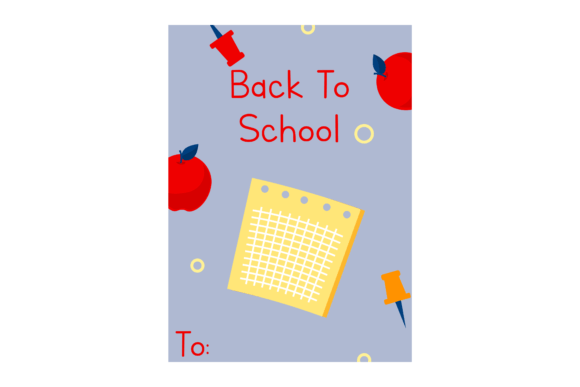
Blue Card Notebook Back to School
If you’ve landed here, you’re likely looking for a design asset that feels both intentional and effortlessly warm — something that bridges nostalgia with clean, modern execution. Blue Card Notebook Back to School isn’t just another school-themed graphic. It’s a thoughtfully composed visual motif built around the tactile familiarity of lined notebook paper, soft blue cardstock tones, and subtle handwritten energy — all wrapped into a versatile, production-ready set of files.
Visually, it leans into gentle contrast: crisp 1920px × 1280px canvas proportions ensure clarity across digital displays, while the restrained color palette (think muted cobalt, warm off-white, and graphite-gray accents) avoids visual fatigue. There’s no forced “cutesy” energy — instead, it carries quiet confidence. The lines are even but not mechanical; the texture is present but never distracting. It reads as trustworthy, approachable, and quietly professional — ideal for creators who want warmth without sacrificing polish.
Where This Design Fits Naturally
This isn’t a one-trick template. Its strength lies in adaptability across contexts where authenticity and clarity matter more than flash.
- Branding & Identity: Small businesses launching back-to-school campaigns — tutoring services, stationery shops, or online learning platforms — use it to signal care, structure, and grounded expertise. A logo lockup incorporating the notebook motif conveys reliability without sounding corporate.
- Editorial & Publishing: Bloggers writing about study habits, academic wellness, or classroom innovation pair it with clean sans serif typefaces to create headers that feel human-centered, not algorithm-optimized.
- Social Media & Digital Ads: Because it includes SVG and PNG files with transparent backgrounds, it scales cleanly across Instagram carousels, Pinterest pins, and email banners — no pixelation, no awkward resizing.
- Packaging & Print: The EPS and DXF formats mean crafters and small-batch makers can cut stencils, laser-engrave notebooks, or print onto kraft paper sleeves with precision. It holds up under physical reproduction because it was built for it.
Readability, Hierarchy, and Audience Trust
Typography and layout work together to shape how people perceive your message before they even read a word. Blue Card Notebook Back to School supports strong visual hierarchy not through boldness, but through thoughtful restraint. Its implied grid — the faint horizontal lines, consistent spacing, and balanced margins — creates an unconscious sense of order. That matters when your audience is scanning quickly on mobile or deciding whether to trust your advice on time management or curriculum design.
It also subtly reinforces brand perception. Unlike overused chalkboard or cartoonish school-bell motifs, this design avoids infantilizing its audience. Adults planning fall semester goals or educators building course materials respond better to cues that honor their experience — and this design does exactly that. It doesn’t shout “school!” — it whispers “structure,” “intention,” and “space to think.” That nuance builds recognition over time, especially when used consistently across touchpoints like email footers, workshop handouts, or podcast show notes.
Practical Tips for Getting the Most Out of Your Files
You’ll receive six format files — AI, EPS, SVG, DXF, JPG, and PNG — each serving a distinct purpose. Here’s how to match them to real tasks:
- AI (Adobe Illustrator): Your go-to for deep customization — adjust line weight, recolor elements, or isolate sections for layered compositions.
- EPS: Use when preparing for high-res commercial print jobs — it preserves vector fidelity at any scale and plays well with older RIP software.
- SVG: Ideal for web use — embed directly into HTML, animate individual layers with CSS, or integrate into Figma prototypes.
- DXF: If you’re cutting vinyl, engraving wood, or using CNC tools, this format ensures clean path interpretation.
- JPG & PNG: PNGs (with transparency) work best for social graphics and presentations; JPGs suit email templates or blog thumbnails where file size matters more than layer control.
Before finalizing a project, test readability in context. Drop the PNG into a mockup of your actual landing page or newsletter template — does the blue tone hold up against your background? Does the line density feel supportive or overwhelming next to your body copy font? These aren’t theoretical questions. They’re the difference between a design that blends in and one that guides attention.
Pairing Thoughtfully — Not Just Matching
Font pairing isn’t about finding something “similar.” It’s about creating balance. Since Blue Card Notebook Back to School carries a quiet, analog sensibility, avoid overly geometric or tech-forward typefaces unless you’re intentionally creating contrast. Instead, consider:
- A warm, open sans serif like Inter or Public Sans for body text — legible, neutral, and friendly.
- A low-contrast serif like Freight Text or Lora for headings — adds gravitas without formality.
- A restrained script (e.g., Playfair Display Italic) only for single-word accents — not full sentences — to echo the handwritten quality without compromising clarity.
Avoid stacking multiple decorative elements. Let the notebook motif carry the personality — your type choices should support, not compete.
Licensing & Real-World Use
This is a commercial font — meaning you can use it in client work, sell products featuring it (like printable planners or merch), and incorporate it into SaaS dashboards or course platforms. No attribution required. But keep scope in mind: if you’re embedding it into software where end users can extract and reuse the files independently (e.g., a design app template marketplace), double-check usage rights. For most designers, bloggers, educators, and small studios, it’s plug-and-play — no legal gymnastics needed.
One last note: value isn’t in how many formats you have — it’s in how reliably they solve problems. With Blue Card Notebook Back to School, you’re not buying pixels. You’re buying flexibility, intention, and a quiet kind of professionalism that resonates with adults who remember what it felt like to sharpen a pencil and start fresh — not just in August, but anytime they choose to begin again.